
A track kit can spend months sitting in a garage and still be one of the most useful accessories a side-by-side owner has purchased.
That sounds contradictory until you consider what the equipment is actually supposed to accomplish. A snowplow might only be needed after a storm. A generator may remain unused until the power fails. Specialized equipment isn’t necessarily valuable because it runs every day. Sometimes its value comes from being available when ordinary equipment can’t do the job.
Counting Hours Doesn’t Tell the Whole Story
Suppose a rural property owner uses a side-by-side for routine maintenance throughout the year. Most days, tires are perfectly adequate. But during several winter storms, the access road becomes impassable. In early spring, saturated ground creates another period when conventional tires struggle.
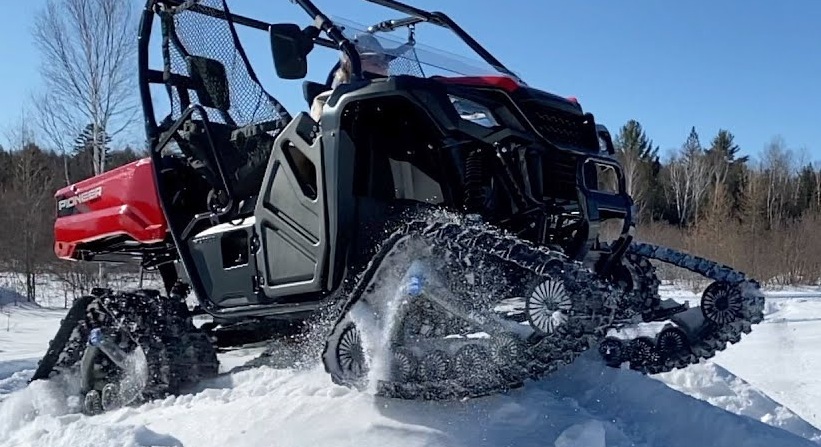
UTV tracks may allow the owner to complete certain trips during those difficult periods. Whether that justifies the purchase depends on what those trips are worth.
Missing a recreational outing is inconvenient. Being unable to reach essential equipment or complete time-sensitive property maintenance may have more significant consequences. The distinction matters when evaluating an expensive accessory.
Compare the Alternatives, Not Just the Price
Track systems commonly represent a four-figure investment before vehicle-specific mounting components are included. That’s substantial money. But the meaningful comparison isn’t always between buying tracks and buying nothing.
Depending on the situation, alternatives might include postponing work, hiring equipment, maintaining a separate winter vehicle, or arranging another way to reach the property.
Each option carries its own costs and limitations. For an occasional recreational rider, renting specialized equipment when available might make more financial sense than ownership. Someone who repeatedly needs dependable seasonal access may reach a different conclusion.
The Operating Budget Changes Too
UTV track systems add rotating weight and mechanical resistance. Fuel consumption generally increases, and travel speed decreases compared with conventional tires.
Maintenance also becomes part of the ownership equation. Rubber components, bearings, and mounting hardware require inspection, while prolonged travel on abrasive surfaces can shorten track life.
These costs aren’t necessarily reasons to avoid tracks. They’re reasons to budget realistically. A buyer who understands the operating requirements is less likely to be disappointed later.
Equipment Choice Affects the Calculation
ATVTracks.net carries Camso and Kimpex systems for different side-by-side applications. Some buyers need tracks for UTVs used primarily in demanding utility work. Others are interested in seasonal recreational access.
Those aren’t identical requirements. Vehicle compatibility, track footprint, intended workload, and manufacturer recommendations should guide selection.
Buying a larger or more expensive system doesn’t automatically produce better results if the equipment isn’t designed for the machine. The company’s vehicle-specific fitment process helps customers identify suitable options before ordering.
Think About the Work You Can’t Postpone
For some owners, side by side tracks are primarily recreational equipment. For others, they support a broader property-maintenance operation. Consider how frequently difficult ground conditions interrupt your plans, whether the interrupted work is essential, and what alternative access would cost.
It also helps to estimate how many seasons you expect to use the equipment. Side by side track systems can remain useful over multiple years when operated and maintained properly, although actual service life depends on conditions and care.
A Different Definition of Value
Not every purchase should be judged by how many hours it operates. A track kit that prevents several serious access problems may provide more practical value than an accessory used constantly for minor convenience.
The key is understanding the difference between equipment you would enjoy owning and equipment that solves a recurring problem. When those two things overlap, the investment becomes easier to evaluate.